The 'Couv'

The 'Couv'
Showing posts with label savings. Show all posts

Tuesday, July 25, 2017

Dog Days of Summer Lazy

Yes lazy is the word. These last several weeks have been fantastic with nothing but delicious golden rays of sunshine and mostly mild warm temps. You just gotta love summer in the great Northwest. This soul soaking sunshine leaves one feeling a tad lazy so I decided to take a lazy day and rerun a post from three years ago that still resonates today. And it has a shameless plug for my book ;)

From this blog on May 8th, 2014 by Rod Sager

This blog talks allot about the joys of retiring to the wonderful state of Washington. But will you have enough to retire at all? Their are alarming reports that nearly half of all middle income earners will retire poor. This makes the low taxation of retirees in Washington less of an advantage.

Retirees should consider value opportunities if their retirement is going to rely heavy on Social Security and part time work. Washington State does offer some great values at the coast and even in close to the metro area here in Vancouver. Check out my beach information here.

The general rule has been that you need about 20 times your annual income at age 62 in order to maintain your lifestyle throughout retirement. Most middle income earners don't have even one year's income in their retirement account.

Many will choose to work longer, maybe until they are 70 years old. Yikes that may or may not work out. Planning for retirement is very important. I wrote a book about finance and I am not adequately prepared for my own retirement which in theory looms menacingly close to the now.
Downsizing your current home before you retire could be a great way to stockpile money for your actual retirement. If you are 50 years old and already in the empty nest mode, perhaps a major home downsize now is in order. The real estate market is showing a resurgence locally in that "big move up" house market. This could be an opportunity to take advantage if you already live locally or if these conditions exist where you live now.

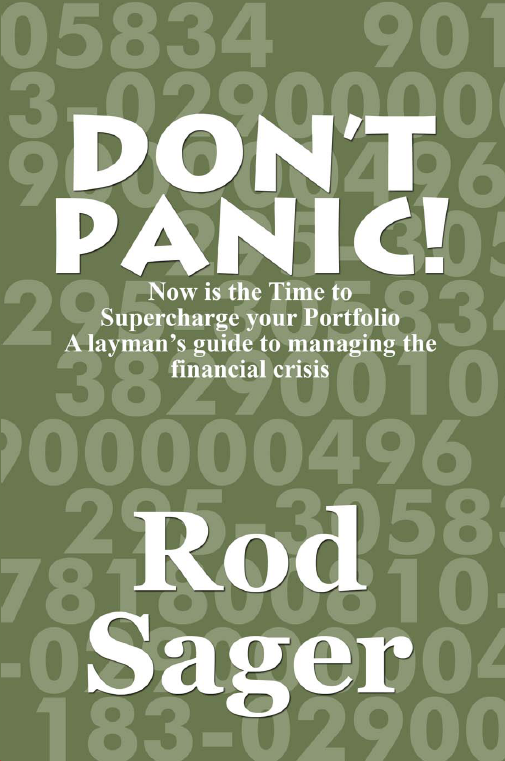
Washington State is a great place to retire, but you still have to be prepared. Check out my book "Don't Panic" on Amazon.com.

Tuesday, November 22, 2016

Fed likely to move rates up next month

Retirees have been wallowing in crummy low interest rates for half a decade now. That is all poised to change as the Fed has indicated the next meeting in December will begin a slow increase in the Fed rate. Retirees generally need to keep money in safe harbors but rates on those types of account have been routinely under 1%. Inflation has spent the last 5 years chewing a hole in the pockets of our retired Americans.

The real estate market has been a huge beneficiary of these record low rates but now the stock market is on a tear and the real estate market seems content so it's time for Feddy to back off the throttle and let rates settle in to market levels.

For retirees it is a good time to consider buying or selling your home or refinancing it if need be while sub 4% rates are still attainable. Any assets in riskier classes should start migrating to safe havens like CDs, bonds and other income bearing investments. Of course any decisions being made in such matters should always be made under the council of a qualified loan officer and/or financial planner.

Buying power is strong right now for anyone thinking about buying a home. As the Fed moves into a less invasive position with rates, we will see a steady quarterly uptick in rates. Where the cost of money will rise, the benefit of saving will improve. Seniors need to be good savers since most are earning less in retirement than they did in the workplace.

Now is the time to consult your trusted professionals to make sure you are in the best position to weather the changes coming down the line.

Tuesday, July 28, 2015

To Own or Owe in Retirement

Many people ponder their financial position as the close in on retirement or sometimes after they begin to adjust to retirement. There is a large contingent of folks that want to have their home free and clear during retirement. At first glance owning a home outright seems like a no-brainer, especially once the homeowner has retired and set on a fixed income.

As with many things in the financial universe the prevailing sentiment is not always the best solution for any one given situation. Generally having a free and clear house is a good thing. The retiree need only be able to make the tax payments and handle maintenance to keep a roof over his head. Regardless of one's financial position, a free and clear home is a good thing. But is it the best thing?

Retirees often find themselves in a bit of an IRS tax challenge. Typically they no longer have tax deductible children, college deductions, etc. They find themselves in a similar position tax wise that they were in decades earlier before the "family". Uncle Sam can dig deep into the pockets of retirees without any shelter. Most retirees do not have enough income to have this "problem". However, retirees that have incomes that approach six figures need to consider the value of having a tax deductible interest payment on their primary residence.

Interest rates are low right now and taking out a 30 year note for half the value of the home during retirement may be a great hedge against the IRS. 50% loan to value protects the homeowner against even the most severe economic downturn but offers up a decade or more of generous tax deductions while the interest payments are still steep early in the loan cycle. Retirees that are drawing on 401k assets can draw less if the taxes are reduced by the deduction against the mortgage. Sometimes the tax benefits outweigh the monthly expense of servicing the note on the mortgage. Additionally the retiree has extra cash in the bank roughly equal to the loan amount at his discretion to use as capital of additional retirement savings.

Retirees are well advised to consult a financial planner and a tax professional to be certain all the possible scenarios are evaluated to ensure the best possible outcome in the future. A house is often a tax shelter as well as a physical shelter, in retirement it may turn out to be the only tax shelter. To owe or own in retirement is a valid question that must be taken under consideration for each
individual situation and always under the advisement of well qualified professionals.
    

Thursday, July 31, 2014

Calculating a Comfortable Retirement

This time I would like to quote an article from Time Magazine about how to calculate your number. The answer to the question, "How much money do you need to retire comfortably"? There are many variables to determining retirement needs and this certainly cannot replace the good counsel of a professional financial planner. But at best it should awaken you to the cold hard realities of retirement.

Excepted from Time magazine

"To help guide you to your number, financial firms have devised income and actuarial models that come up with a target multiple of your final year’s salary. Benefits consultant Aon Hewitt says that by age 65 an average full-career worker needs to have banked 11 times annual pay. That means a household earning $75,000 a year would need to have saved $825,000. Work to age 67 and the multiple drops to 9.4 ($705,000); retire at age 62 and the multiple rises to 13.5 ($1 million).

The fund company T. Rowe Price advises a multiple of 12 times final pay, while Fidelity calculates that a multiple of eight times pay will do the trick. All the firms use slightly different assumptions. But you can see that they are in the same ballpark and, more importantly, that it’s a big park.

Looking at it another way, BTN Research estimates that, assuming 5% average annual investment returns, for every $1,000 of monthly income you want over a 30-year retirement, you need $269,000 in the bank. Let’s consider that same household making $75,000 a year. To replace the commonly recommended 80% of income in retirement — or $60,000 in this case — the household would need $5,000 a month. In this calculation, this household’s number is $1.35 million, or 18 times final pay. A higher investment return would bring the numbers down.

Finally, there is the approach that Dallas Salisbury, president of the Employee Benefit Research Institute offers: You need 33 times what you expect to spend in your first year of retirement—after subtracting Social Security benefits. Let’s take that same household, which spends every penny of its $60,000 income in retirement. Say this household collects $20,000 a year in Social Security. That leaves it spending $40,000 from other sources. So this household still needs a nest egg of $1.32 million, or just shy of 18 times final pay.

Don’t be discouraged. These are just estimates. A household with two good traditional pensions plus Social Security, and zero savings, might be in fine shape while a household with $1 million in the bank and no guaranteed lifetime income ends up struggling. That’s why your spending–not your savings–may be the most important part of the equation.

Basing your number on final pay has another flaw. What if you are frugal and live on far less than you earn? The household that earns $75,000 a year but saves 20% and thus spends only $60,000 need not squirrel away as much as a household earning $60,000 a year but which through credit spends $75,000. The latter household, by the way, is headed for real trouble — and, sadly, this situation is not uncommon.

(MORE: Etsy’s Handmade Wars)

What you spend determines your nest egg needs. “In retirement, the key is to make sure your burn is less than your earn,” says John Sweeney, executive vice president of planning and advisory services at Fidelity. Everyone’s situation is different, which is why you need to think through your own case.

An array of online calculators can help you sort this out. Some key considerations:
Life expectancy The Society of Actuaries estimates that for a married 65-year-old couple, there is a 45% chance of one person reaching 90 and a 20% chance one will reach 95. Plan for a long life.
Medical costs EBRI estimates that a 65-year-old couple in 2019 that does not have any employer-provided health benefits will need $450,000 to have a 50% chance of funding health care expenses not covered by Medicare. Even with employer benefits, there is a 50% chance that out-of-pocket expenses will reach $268,000. Plan for this big expense.
Inflation Over 30 years, expect inflation to cut your spending power in half. You would need nearly $12,000 today to match the spending power of $5,000 in 1982.
Investment style You may never reach your number if you hide from stocks. Bond yields and short-term interest rates are so low that, adjusted for inflation, you may get little or no growth for years.
Savings rate A good rule of thumb is saving 15% of income each year throughout your working life. That puts you on track to replace about 85% of your final year’s salary for 30 years of retirement without worrying about some gigantic number. If you have not been saving at that rate, you may need to adjust your savings plan or your retirement expectations.

Most planners will tell you that there is no magic number, and they are right. Life has a way of throwing curveballs when you least expect them and there are so many unknowables like how long you will live and what the markets will do that you need to reassess your plan often as you approach retirement—while you still have time to change your savings patterns and choose to work longer if you must.

So what can you do now?

Start with a list of all your monthly expenses. Go through it looking for areas that you can or will reduce in retirement. Now consider any new expenses like escalating health care costs and travel and hobbies. Identify which of these is a fixed cost and which is discretionary. You’ll need a big enough number to secure an income stream that covers all fixed costs. This is your base number, the lowest one that you should consider acceptable."